CBT Thought Challenging Cards
In the fast-paced world of graphic design and visual communication, tools that combine psychological insight with creative utility are rare gems. CBT Thought Challenging Cards offer a unique blend of cognitive behavioral therapy principles and practical design elements, making them an invaluable resource for designers, marketers, and creators seeking to enhance their projects with thoughtful, user-focused content.
Design Meets Psychology
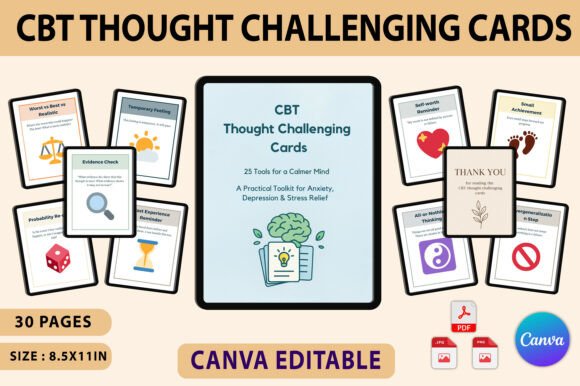
These cards are more than just a self-help tool; they serve as a bridge between psychology and design. Each card is crafted with simplicity in mind, featuring clear visuals, minimal text, and intuitive layouts that align with modern design trends. The clean, uncluttered format ensures readability and usability, which is essential when creating materials that need to be both informative and engaging.
The inclusion of icons and visual cues not only enhances the aesthetic appeal but also supports the cognitive process of challenging negative thoughts. This makes the cards highly adaptable for use in various design contexts, from branding materials to digital assets.
Practical Applications in Design Workflows
For designers working on brand identity or logo development, these cards can be a powerful tool for fostering clarity and focus. By incorporating reflective prompts and coping reminders, they help maintain a balanced perspective during the creative process. Similarly, in marketing and advertising campaigns, these cards can inspire content that resonates emotionally while reinforcing positive messaging.
When designing social media graphics or editorial layouts, the structured approach of CBT Thought Challenging Cards can guide the creation of visually cohesive and meaningful content. They encourage a mindful approach to typography, color, and composition, ensuring that each element contributes to a polished final product.
Additionally, these cards can be integrated into packaging design, website interfaces, and even merchandise. Their versatility allows them to be resized, rebranded, and adapted to fit different design goals, making them a flexible asset in any creative workflow.
Enhancing User Experience and Brand Communication
One of the key strengths of CBT Thought Challenging Cards lies in their ability to improve user engagement. Whether used as part of a digital product or printed material, they provide a tangible way to support mental well-being while reinforcing brand values. For instance, a brand focused on wellness can incorporate these cards into their marketing strategy to create a deeper emotional connection with their audience.
From a design standpoint, the cards’ emphasis on simplicity and clarity aligns perfectly with the principles of good UX design. They demonstrate how thoughtful design choices can enhance communication, build trust, and create a more engaging user experience.
Moreover, the inclusion of a notes section offers an opportunity for personalization, allowing users to tailor the cards to their specific needs. This adaptability is especially valuable in creative projects where customization plays a crucial role in standing out in a competitive market.
Design Tips for Effective Use
- Consistency: Ensure the cards align with your brand’s visual identity, using matching colors, fonts, and styles.
- Readability: Prioritize legible typography and ample white space to keep the content accessible.
- Scalability: Test the cards at different sizes to ensure they remain effective across various platforms and formats.
- Visual Hierarchy: Use layout techniques to guide the viewer’s attention and reinforce key messages.
- Audience Expectations: Tailor the content to suit the target audience, whether it's for professional use or personal reflection.
By integrating CBT Thought Challenging Cards into your design process, you not only enhance the quality of your work but also contribute to a more thoughtful and impactful visual communication strategy. These cards exemplify how combining psychological insight with design excellence can lead to more meaningful and effective creative outcomes.